
How to Search Brookhaven Property Records
Brookhaven has no recorder or assessor of its own. DeKalb County maintains the deeds and ownership profiles. It also keeps the values, taxes, and parcel mapping for every address inside the city. Begin with a street address in COMPASS or Property Appraisal. Copy down the APN, situs address, mailing address, tax district, and both the current and January 1 owner. Carry that county key into the Clerk or GSCCCA deed index. Then layer on Brookhaven's own permit, zoning, variance, and code records.
- Locate the parcel and verify it falls inside Brookhaven.
- Save the APN and assessor owner and value fields.
- Confirm the newest transfer in the deed index.
- Match lot and block with county GIS and the recorded plat.
- Search Brookhaven's Project Portal and planning cases.
The full DeKalb County property search walkthrough explains every county field in detail. When a current address returns no city file, try older development names, past owners, and applicants instead.
Where Brookhaven Property Records Are Kept
Four offices split the work. The DeKalb Clerk records land instruments and plats. Property Appraisal maintains ownership and valuation profiles. The Tax Commissioner issues bills. GIS provides the parcel reference layer. Brookhaven Community Development holds the rest: planning, zoning, building inspections, land development, code enforcement, and fire-marshal files. City and county sources connect through the address and APN. Only the recorded deed, though, proves a title actually transferred.
DeKalb County Records (deeds, taxes, parcels)
County offices hold ownership, deeds, values, taxes, plats, and parcel maps.
Brookhaven Permits & Zoning
Community Development permit, variance, zoning, and code records
Brookhaven, GA
Brookhaven Records Across Incorporation
Brookhaven incorporated in 2012. Deeds, assessments, taxes, and parcel numbers run straight across that date. Planning and permit custody shifted with the new municipal government. The city says its older zoning material reaches back to the 1950s. DeKalb County handled pre-incorporation cases, though. Whenever a project began under county authority, search both custodians.
Request older files by current and former address, APN, subdivision, applicant, case number, and date range. When land-use history matters, ask for the ordinance, site plan, conditions, hearing action, and final map too.
Brookhaven Project Portal Records
The Land Development Transparency viewer summarizes permits, variances, and code-enforcement cases, and it accepts a tax parcel by address or parcel ID. Its application workflow tracks the permit or case type, subtype, project name, map address, selected parcels, applicant, owner, contractor, permit details, documents, certification, and submission. Public summary access and account-based application files are two different things.
The official Brookhaven Project Portal appears below.
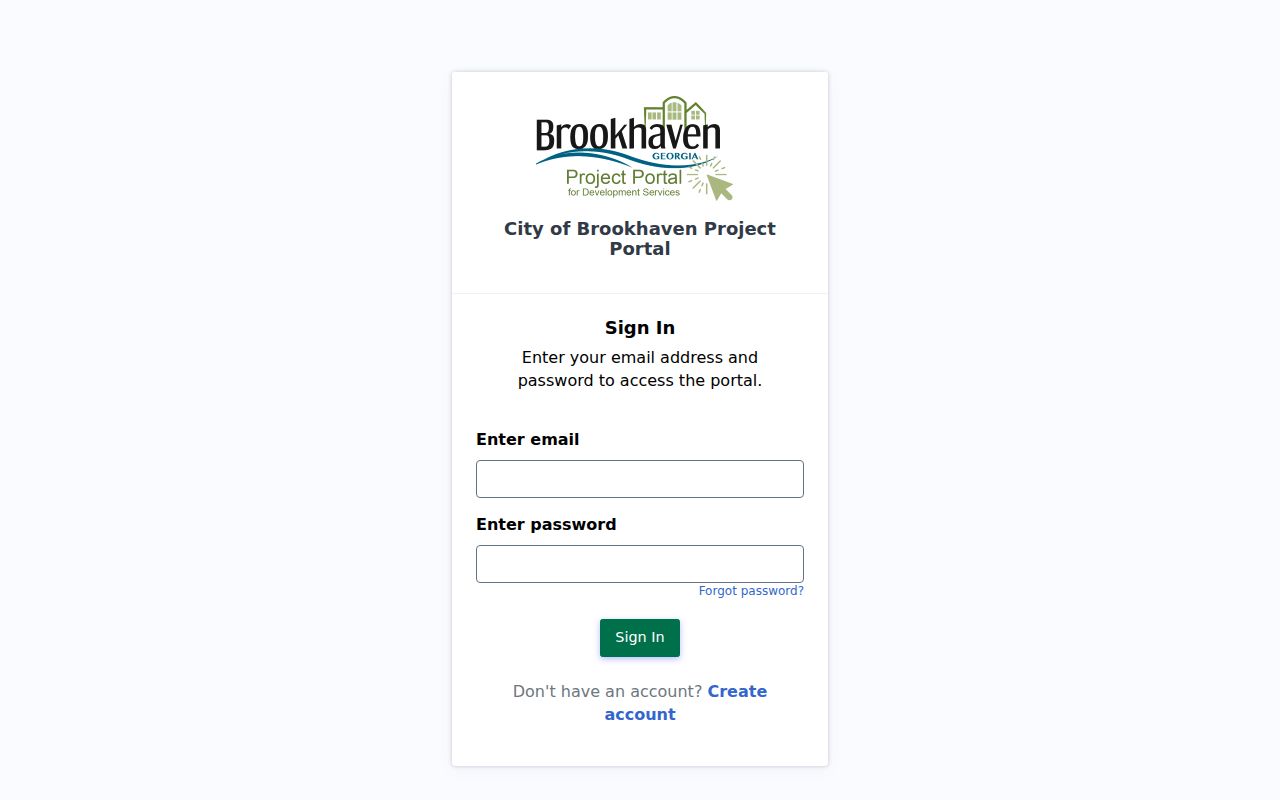
A portal result can add status, inspection, review-comment, variance, or code context to a county parcel. It still cannot alter the deed.
Brookhaven GIS Tests City Limits
Brookhaven's GIS and the DeKalb parcel viewer work together. They separate the true city boundary from a postal label. That distinction matters near Atlanta, Chamblee, unincorporated DeKalb, and any street whose mailing city disagrees with its jurisdiction. Before picking a permit custodian, save the city-limit layer. Also save the address point, the parcel polygon, and the APN. The Brookhaven GIS source includes city map access.
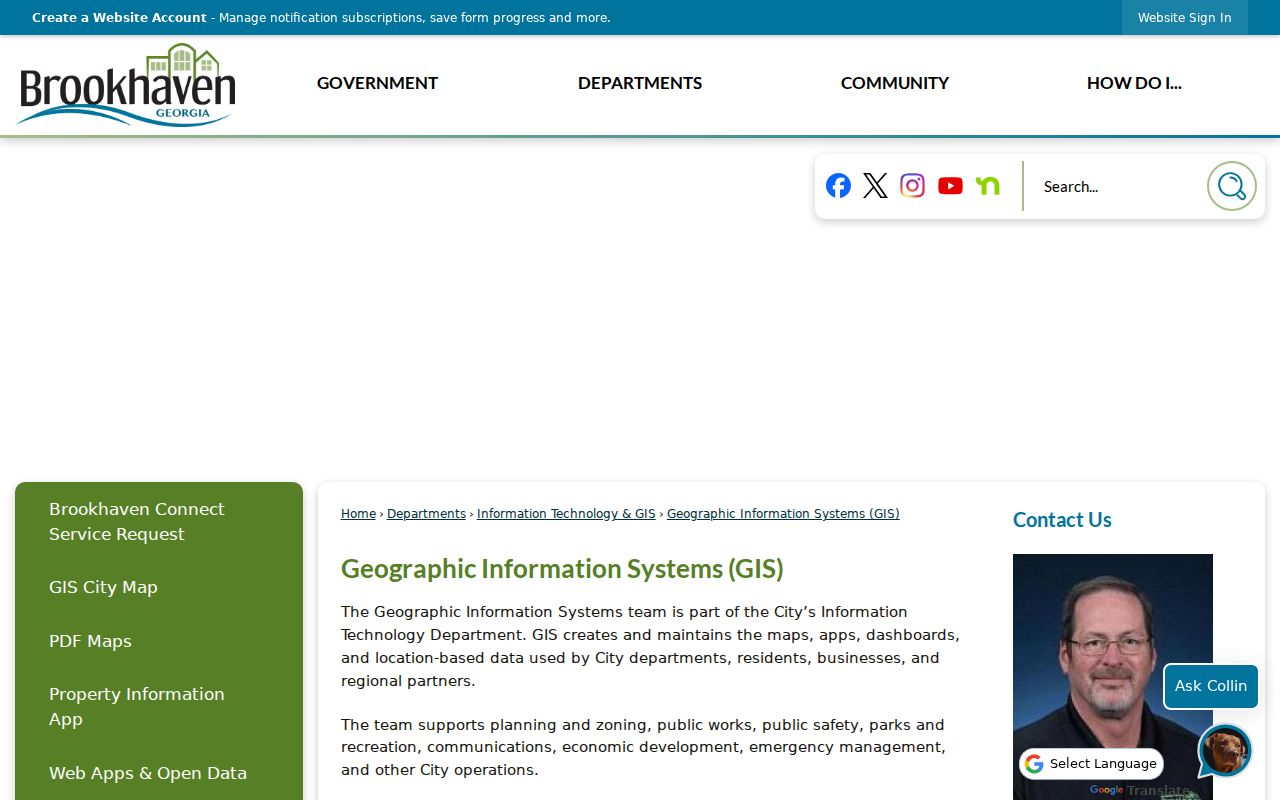
The Brookhaven GIS viewer is a good first stop for sketching out city limits. For anything formal, the Clerk's plat and a licensed surveyor still control where Brookhaven's boundary lines actually fall.
Brookhaven ZIPs Are Screening Clues
A ZIP can narrow an address search. It cannot prove a parcel sits inside Brookhaven. Postal geography and municipal boundaries answer different questions. Near an annexation edge, confirm the situs address, the parcel number, and the current city-limit map. The county APN stays the cross-system key. Brookhaven publishes no separate city parcel numbering scheme.
Keep the historic street or development label beside the current situs for an old address. Do not replace it. Deeds, plats, parcel genealogy, directories, and newspapers often show how the two descriptions connect.
Brookhaven Records Show Two Addresses
An assessor profile shows two addresses. The situs address covers the land. A mailing address covers the owner. An out-of-state mailing address never moves the Brookhaven parcel. It can explain, though, why an owner-name result lands far from the property. Write down both fields with the tax year and APN.
After a recent sale, look at two labels in the profile. Set current ownership beside January 1 ownership. Then check both against the newest deed. DeKalb publishes no standard update lag. A recorded conveyance can therefore be fresher evidence than the annual roll. Meanwhile the city permit file may still list an applicant, contractor, or former owner.
Brookhaven Values and Development
The DeKalb assessor publishes year-specific appraised and assessed values, sales, exemptions, and improvement data for Brookhaven parcels. City development cases describe proposed or approved work. They are not appraisals. Compare the same parcel and tax year. Keep the recorded sale price, the assessor's value, and the Tax Commissioner's bill clearly separated.
Permit review estimates are not record-request deadlines. Brookhaven publishes workflow estimates for land-disturbance and minor site permits. An Open Records request follows Georgia's separate response rule. Log the source and date for every status you collect.
Open Records for Brookhaven Files
A viewer summary rarely tells the whole story. Ask the city for the complete file. Request the plans, review comments, and inspection history. Also ask for conditions, correspondence, and the final action. Georgia agencies generally must produce responsive records within three business days. If they cannot, they must state the estimated cost, timing, and any exemption. They need not build a house-history report for you. An empty search result never proves a case is absent. Try old development names, address variants, and parcel predecessors. Also search by owners, applicants, and the county's pre-incorporation planning archive. Keep going before closing the search.
Brookhaven Neighborhoods and Subdivisions in the Records
Old records speak in old names. Historic Brookhaven research works best with the development names. Those names appear in deeds and plats. Brookhaven Estates began as a golf-course community in 1910. Country Club Estates, the Carleton Operating Company, and Oglethorpe Park can surface as related terms. They are related but nonidentical, so compare carefully. Never force modern neighborhood speech onto an older legal description. Compare subdivision, lot, block, land lot, book and page, and parcel genealogy before claiming a match.
| Neighborhood / Subdivision | Era | In the Records |
|---|---|---|
| Brookhaven Estates | Planned 1910 | Search the historic development name with lot and block. |
| Country Club Estates | 1920s development era | Compare party and plat terms rather than treating it as a synonym. |
| Oglethorpe Park | Historic plat context | Test the name in deed and plat indexes with the present APN. |
| Historic Brookhaven | 1910, 1929, 1936 sequence | Use development-era sources to bridge old and current descriptions. |
A recorded plat anchors the search. Use the DeKalb County parcel maps to connect the historic label to a current APN, since the map helps locate the lot. A survey still fixes the physical boundary.
What Brookhaven Property Records Show and Their Limits
Brookhaven property records have real reach. They can document recorded transfers, assessed ownership and value, taxes, parcel context, and municipal permits or land-use cases. The limits matter just as much: no file proves clear title, an exact line on the ground, code compliance for all work, or current market price. A neighborhood history can guide a search, but it never establishes ownership.
Lawful use. Use Brookhaven property records for property research, due diligence, tax review, and civic transparency. Do not use owner data to stalk, threaten, or harass.